As demand for storing and shipping temperature-sensitive products keeps growing, the cold chain industry hasn’t stood still — new refrigerant chemistries, packaging materials, and monitoring methods keep pushing past limits that used to be hard constraints. Cryophase exists to track those innovations closely and put the ones that actually hold up in real conditions into the hands of businesses that need them.
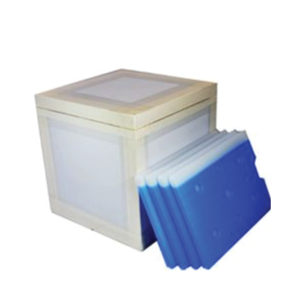
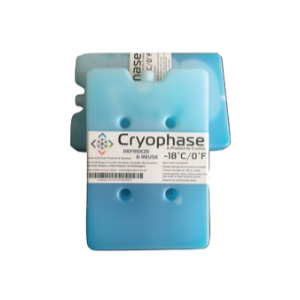
A refrigerant, in the engineering sense, is anything that absorbs heat by undergoing a phase change — solid to liquid, or liquid to gas — and the specific thermodynamic properties of that phase change determine how it performs in a temperature maintenance application. Cold chain logistics manages thermal load through ice replacements built around this principle, and the catalogue is wider than most people expect: ice, dry ice, gel ice packs, ice bricks, ice wraps, bubble-back gel packs, instant-activation packs, hot-and-cold packs, and engineered dry ice packs, among others.
Gel ice packs exist because plain water ice has a hard ceiling. Water freezes at 0°C, full stop, and that fixed melting point was a real constraint on cold chain performance — the colder a refrigerant can run, the longer it holds before melting through. Early gel packs simply added sodium chloride to water, since salt water depresses the freezing point depending on concentration — more salt, lower freeze temperature, longer hold time. It’s a simple piece of chemistry, but it’s the foundation a lot of modern refrigerant engineering still builds on.
Dry ice — compressed, solid carbon dioxide — takes a different approach entirely. It sublimates directly from solid to gas at around –78°C, and it’s been in commercial use since 1924. The chemistry is straightforward and the production is relatively simple, but dry ice is classified as a dangerous good for transport, which means it needs specific handling systems and trained personnel to move safely. As cost pressure builds across every industry that ships temperature-sensitive goods, there’s real demand for cold chain solutions that get close to dry ice’s performance without the regulatory and handling overhead.
Across the full range of ice pack formats — gel packs, ice bricks, ice wraps, bubble-back packs, instant-activation packs, hot-and-cold packs, and engineered dry ice packs — most products that touch food directly need to be food-grade and FDA-approved, and a smaller subset designed for direct skin contact (cold therapy, heat therapy, contact therapy) often needs additional regulatory approval depending on the country. It’s also worth knowing that the FDA has moved to restrict several glycol-based refrigerant formulations previously common in consumer ice packs, after evidence of adverse health effects — which is part of why Cryophase engineers around phase change materials and food-grade polymer gels rather than older glycol chemistry.